Hedzranawo Slavery Museum, Ketu South: Visited, Praised, Forgotten
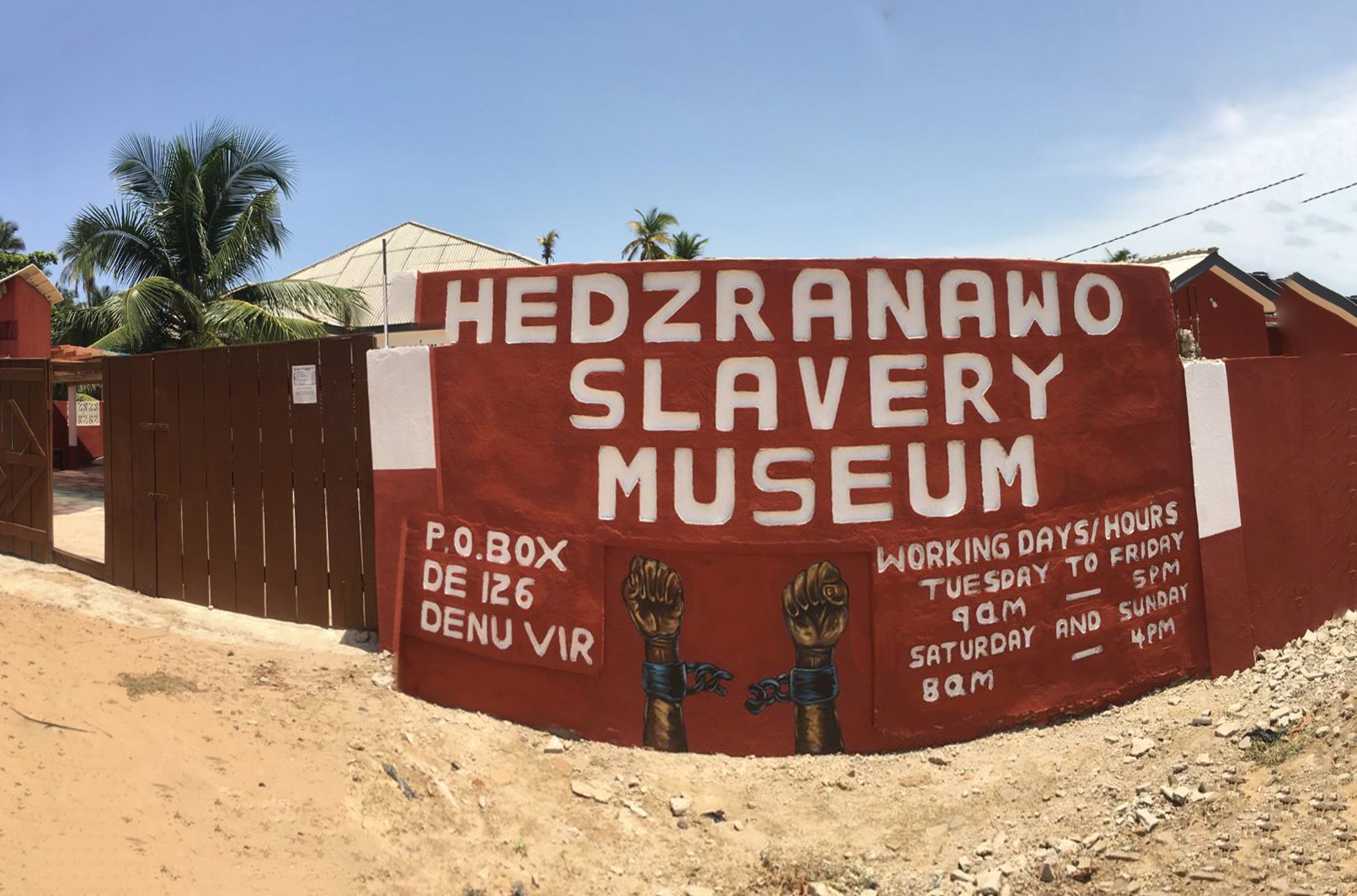
Header photo: The Slavery Museum, entrance.
Heritage and History · Volta Region · Field report
Hedzranawo Slavery Museum, Ketu South: Visited, Praised, Then Forgotten
Beneath a rehabilitated brick building near Denu lies a centuries-old dungeon where enslaved Africans were held. A Ghanaian professor and a German foundation turned it into a museum. Ghana's Tourism Minister has visited it twice, and a foreign High Commissioner called it a place every African should see. Since then, almost nothing.
By Remo Kurka · ghanamuseums.com
A dungeon under the floor
Hedzranawo is a small town on the coastal road in Ketu South, between Denu and Adafienu, only a short drive from the border at Aflao. Most travellers heading for Lomé pass straight through without knowing what lies beneath it.
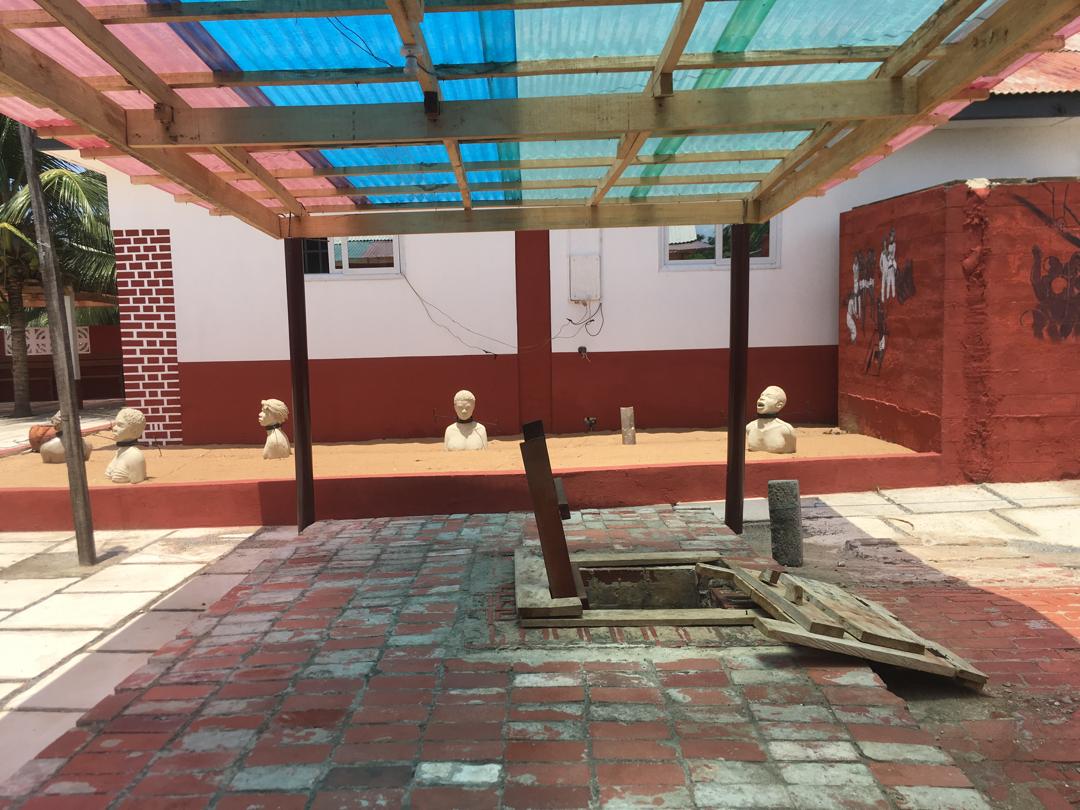
The museum occupies a rehabilitated brick building that once served as a European slave post. Its most striking feature is an underground vault, a centuries-old dungeon where enslaved Africans were confined. When the museum opened, the chief of Hedzranawo, Torgbui Sape Agbo V, climbed down the wooden staircase into the vault. He came out after less than two minutes, unable to breathe in the heat and darkness. His verdict was short:
"Our forefathers suffered."
Above ground, seven sections of the museum present the history of slavery in the three neighbouring towns, Hedzranawo, Adzido and Adafienu. On display are objects recovered from the ground: old liquor bottles, ceramic plates, glass and beads, the goods that were traded along this coast.
Built without the state
This museum was not built by the Ghanaian state. It grew out of research begun in 2018, when the archaeologist Professor Wazi Apoh of the University of Ghana and his colleague Dr Mark Seyram Amenyo-Xa set out to identify slave heritage sites along the Volta coast. What they found in these three towns convinced Professor Apoh to come back.
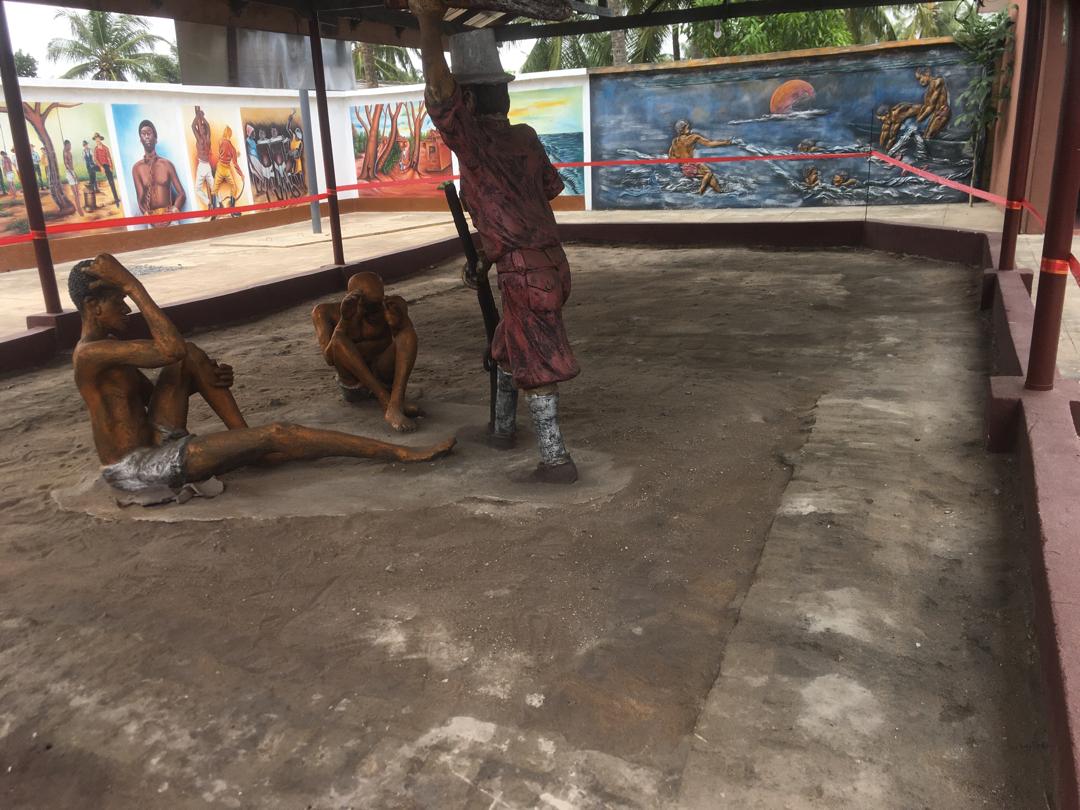
From 2019 the work continued as the Coastal Volta Enslaved Route Project, funded by the Gerda Henkel Foundation in Germany. Its students excavated the site, the community formed a project committee, and on 19 December 2023 the Hedzranawo Slavery Museum opened to the public. Two companion sites belong to the same project: the Hedzranawo-Adzido Slave Market Memorial Centre and the Adafienu Palace Slave Museum. At the Adzido memorial, sculptures and painted scenes mark a site believed to have been a slave market, beside the exposed foundations of a two-room house or barracoon used in the trade.
Museum: Hedzranawo Slavery Museum, Somé Traditional Area, Ketu South Municipality, Volta Region
Opened: 19 December 2023
Open: Tuesday to Friday 9:00–17:00, Saturday and Sunday 8:00–16:00. Closed on Mondays.
Entrance: Ghanaian visitors GH₵ 10 (pupils), GH₵ 15 (students), GH₵ 20 (adults) · Foreign visitors GH₵ 20 (children), GH₵ 30 (students), GH₵ 50 (adults)
Contact: P.O. Box DE 126, Denu · Phone and WhatsApp +233 24 196 6105
Built by: Coastal Volta Enslaved Route Project, led by Prof. Wazi Apoh, University of Ghana
Funded by: Gerda Henkel Foundation, Germany
Companion sites: Adzido Slave Market Memorial Centre, Adafienu Palace Slave Museum
Museum website: hsm2023.com
In depth: hedzranawo.ghanamuseums.com, our dedicated site on the museum
Two visits from the minister, in her own constituency
In May 2025 the Minister for Tourism, Culture and Creative Arts, Abla Dzifa Gomashie, began her first regional tour at Hedzranawo. She was received by the traditional leadership of the Somé Traditional Area. Torgbui Sape Agbo V thanked her and spoke openly about the difficulties of developing the museum, and he offered a large parcel of land to investors willing to build tourism facilities. The minister saw the excavated artefacts and the dungeon, and the official account said efforts were ongoing to develop it into a major cultural tourism destination.
In October 2025 she came back. Her delegation toured Fort Prinzenstein in Keta, the Avu Lagoon and the Hedzranawo museum. She complained about poor road access and urged district assemblies to invest in tourism from their Common Fund allocations. Then she said:
"Tourism is not the business of government alone."
One detail makes this harder to excuse. Abla Dzifa Gomashie is not only the Tourism Minister; she is the Member of Parliament for Ketu South. Hedzranawo lies in her own constituency. A minister who visits a slave museum in her own constituency twice, and then leaves it to a professor, a German foundation and a village chief, is sending a message of her own.
A visitor from Namibia
In August 2026 the High Commissioner of Namibia, Ndiyakupi Nghituwamata, toured Keta, Anloga and Ketu South. She said it mattered to her to visit the slave market memorial and the historical sites, as part of understanding Africa's shared past. She compared it to Christians travelling to Jerusalem: Africans, she said, needed to see places such as Keta Fort, the Anloga Lighthouse and the Hedzranawo slave museum, to learn how their ancestors were taken from the continent.
The museum itself recorded her visit. The video below was sent to me by the museum. The upper part shows an interview; the lower part takes the viewer through the museum.
A Namibian diplomat put into words what Ghana's own tourism authorities have not: that this is a place of pilgrimage. Namibia knows something about colonial violence and the long silence that follows it.
And then, crickets
After the visits, the speeches and the photographs, nothing followed. No promotion campaign, no road improvement, no national budget line anyone has announced, no place for Hedzranawo in the big reparations events in Accra. The museum continues as it began: carried by a university professor, a German foundation and a community that offered its own land and its own history.
My view
I have watched this pattern for many years, and my strong opinion is that sites like Hedzranawo, and Frederiksgave, the Danish plantation on the Akuapem ridge, are left in the shade because they do not fit the story Ghana's government wants to tell abroad. The reparations campaign led by President Mahama speaks of slavery as something done to Africa by Europe, and it is right to demand justice. But Hedzranawo and Frederiksgave show slavery happening inside Ghanaian communities and on Ghanaian soil: in local trade posts, in markets, in plantation fields. That history is more complicated, and it is uncomfortable. It is also true. A country that asks the world for repair should first look after the places on its own ground that prove why repair is needed.
This is my own reading, based on what I have seen. Readers may disagree, and the Ministry is welcome to prove me wrong with action.
The irony with Germany
There is a further irony. Ghana is currently negotiating the return of looted objects from German museums, and Professor Wazi Apoh is himself a member of Ghana's National Focal Team on Reparation and Restitution. Yet one of the few new slavery museums opened in Ghana in recent years exists largely because a German foundation paid for it. If Ghana wants objects to come home, it will have to show that it can look after the heritage it already has. Hedzranawo would be a good place to start.
Explore the museum in depth
Since this report was first published, the museum has shared its photographs, videos and recordings with us. Together they now form a dedicated site: the history of the slave post and the slave market, a photo viewer of the dungeon and the exhibits, the full visit of the Namibian High Commissioner, directions, opening hours and entrance fees, and how visitors, researchers and the diaspora can support the museum. A German-language edition is online too.
Visiting Hedzranawo
Hedzranawo lies on the coastal road in Ketu South, between Denu and Adafienu, close to the Aflao border with Togo. From Accra, take the Accra–Aflao road east through Tema, cross the Volta and continue towards Denu. The museum is open Tuesday to Friday from 9:00 to 17:00, and on Saturday and Sunday from 8:00 to 16:00; it is closed on Mondays. Entrance is GH₵ 50 for foreign adults, GH₵ 30 for foreign students and GH₵ 20 for foreign children; Ghanaian visitors pay GH₵ 20 (adults), GH₵ 15 (students) and GH₵ 10 (pupils). Bring cash in cedis, and message the museum on WhatsApp, +233 24 196 6105, before you travel, especially with a group. Combine the visit with the Adzido Slave Market Memorial Centre, the Adafienu Palace Slave Museum and Fort Prinzenstein in Keta, about an hour along the coast. Full directions are on our visitor page.
Volta Region tours
Guided Volta Region tours are the easiest way to reach the coastal heritage sites and Fort Prinzenstein with a local guide. Entrance fees are included in the tour price; tips are not included but always welcome.
What Hedzranawo needs
- A place in Ghana's national heritage promotion, not only a stop on a minister's tour.
- Better road access and signage, as the minister herself demanded.
- Support for conservation of the dungeon and the excavated objects.
- Recognition alongside the coastal castles, so that visitors see the full route of the trade, not only Cape Coast and Elmina.
- Follow-up on the promises made in May and October 2025.
If you want to help, read how visitors, researchers and the diaspora can support the museum.
Verified and fact-checked: 18 October 2026. Opening hours and entrance fees confirmed by the museum. Photographs, video and audio courtesy of the Hedzranawo Slavery Museum. Sources: Ghana News Agency, Ministry of Tourism, Culture and Creative Arts, Modern Ghana, BusinessGhana, University of Ghana, Hedzranawo Slavery Museum.